

You’re using a computer right now that would have seemed like magic 50 years ago. But what if I told you that today’s computers — the ones we call “powerful” — are about to look like ancient calculators? Welcome to the world of quantum computing, and I promise, no math degree required.
If you’ve ever Googled “quantum computing explained” and ended up more confused than when you started, you’re not alone. Scientists write most articles for other scientists. This one is written for you. A curious human who wants to understand what the fuss is all about.
Let’s fix that today.
What Even Is Quantum Computing? (The Honest Answer)
Let’s start with something you already know.
Your laptop, your phone, your smart TV — every single one of them works on the same basic idea that was invented in the 1940s. They use bits. Think of it a bit like a light switch. It’s either ON (1) or OFF (0). Every email you send, every YouTube video you watch, every photo you take — all of it is just billions of tiny light switches flipping on and off really, really fast.
Now here’s where quantum computing gets wild.
What if a switch could be ON and OFF at the same time?
That’s not science fiction. That’s quantum physics. And that’s exactly what a qubit (quantum bit) does. Thanks to a property called superposition, a qubit doesn’t have to choose between 0 and 1. It can be both simultaneously, until you measure it.
Think of it this way:
Imagine you’re looking for your keys in your house. A regular computer searches one room at a time — bedroom, kitchen, living room, bathroom. A quantum computer is like searching ALL rooms at the exact same time.
That’s the power we’re talking about.
My First Encounter With Quantum Computing (And Why It Blew My Mind)
I remember the first time I really understood what quantum computing meant for the real world. I was reading about a problem called the “travelling salesman problem” — basically, if a delivery driver needs to visit 20 cities, what’s the fastest route?
Sounds simple, right?
A regular computer would need to check 2.4 quintillion possible routes to find the perfect answer. That’s 2,400,000,000,000,000,000 routes. Even the world’s fastest supercomputer would take thousands of years to solve it perfectly.
A quantum computer? Potentially seconds.
That’s when it hit me — this isn’t just a faster computer. This is a completely different way of thinking about computing. And it’s going to change medicine, climate science, finance, artificial intelligence, and cybersecurity in ways we’re only beginning to imagine.
The Real Problem With Explaining Quantum Computing
Here’s something nobody tells you: even the experts find quantum computing weird.
Richard Feynman, one of the greatest physicists who ever lived, once said: “If you think you understand quantum mechanics, you don’t understand quantum mechanics.”
So if you’re confused, you’re actually in good company with Nobel Prize winners. The truth is that quantum mechanics — the physics behind quantum computing — doesn’t behave the way our everyday world behaves. It’s strange. It’s counterintuitive. It breaks your brain a little bit.
But that’s okay. Because you don’t need to understand the physics to understand the impact. You don’t need to understand how an engine works to drive a car.
Let’s focus on what matters: What can quantum computers actually do, and why should you care?
The Three Superpowers of Quantum Computing
Superpower #1: Superposition — Being in Two Places at Once
We touched on this earlier, but let’s go deeper.
When you flip a coin, and it’s in the air, it’s neither heads nor tails yet — it’s both possibilities at once. The moment it lands, it “collapses” into one answer. Qubits work the same way. While they’re computing, they exist in all possible states simultaneously. The moment you measure the answer, they collapse into a definite result.
This allows quantum computers to explore millions of possible solutions at the same time, rather than one at a time, as your laptop does.
- Regular computer with 3 bits: Can store ONE combination (like 010)
- Quantum computer with 3 qubits: Can store ALL 8 combinations simultaneously (000, 001, 010, 011, 100, 101, 110, 111)
Add more qubits, and the power explodes exponentially. 300 qubits can represent more states than there are atoms in the observable universe. Let that sink in.
Superpower #2: Entanglement — The Spooky Connection
Einstein called it “spooky action at a distance” — and he didn’t mean it as a compliment. He thought it was impossible. Turns out, he was wrong.
Quantum entanglement means two qubits can be linked together in such a way that whatever happens to one instantly affects the other — no matter how far apart they are. Not almost instantly. INSTANTLY. Faster than light.
For quantum computing, this means groups of qubits can work together in a deeply coordinated way that regular bits simply cannot. It multiplies the computational power dramatically and allows quantum computers to tackle problems with incredible efficiency.
Imagine a team where every member instantly knows what every other member is doing — no communication needed, no lag, no errors. That’s entanglement in a team setting.
Superpower #3: Interference — Cancelling Out Wrong Answers
This is the secret sauce that makes quantum computing actually useful.
In quantum computing, algorithms are designed to make wrong answers cancel each other out (like sound waves cancelling each other) and correct answers reinforce each other. So by the time you get your result, the wrong possibilities have eliminated themselves, and only the right answer is left standing.
Without interference, quantum superposition would just give you random noise. With it, you get reliable, powerful computation.
Quantum Computing vs Regular Computing: The Real Comparison
A lot of people ask: “Is quantum computing just a faster regular computer?”
The answer is no, and this misunderstanding is really important.
| Regular Computer | Quantum Computer | |
| Basic unit | Bit (0 or 1) | Qubit (0, 1, or both) |
| Best for | Everyday tasks, apps, internet | Complex optimization, simulations |
| Speed advantage | Fast for most things | Exponentially faster for specific problems |
| Error rate | Very low | Currently high (work in progress) |
| Availability | In your pocket | Still mostly in research labs |
| Temperature | Room temperature | Near absolute zero (-273°C) |
| Cost | ₹30,000 laptop | Millions of dollars |
Think of it this way: A regular computer is like an incredibly fast, incredibly reliable car. A quantum computer is like a teleporter. You wouldn’t use a teleporter to drive to the corner store — it would be overkill. But for crossing continents instantly? Nothing else comes close.
Quantum computers are not replacing your laptop. They’re solving a completely different class of problems that regular computers simply cannot handle efficiently.
What’s Actually Happening in Quantum Computing Right Now — 2026 Update
This is where it gets really exciting, because quantum computing is no longer just a theoretical concept. Real things are happening right now, in 2026.
IBM’s Quantum Roadmap is Advancing
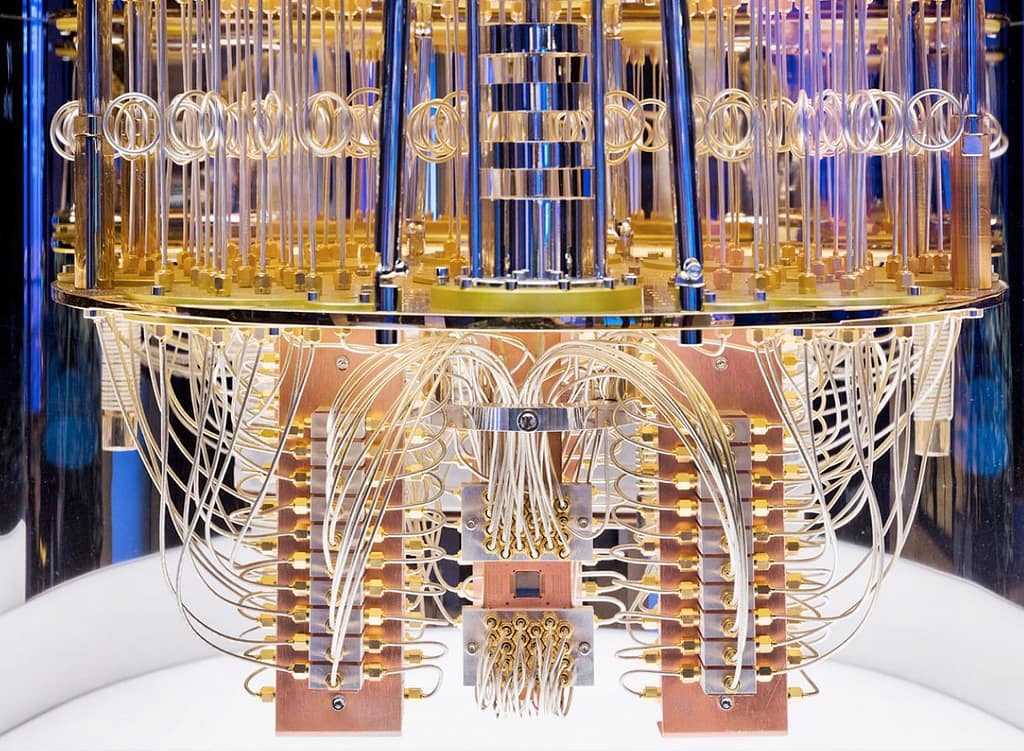
IBM has been publishing quantum computing milestones consistently. Their quantum processors have been scaling up qubit counts and reducing error rates year by year. IBM has made quantum computing accessible through its IBM Quantum platform, where developers and researchers can actually run programs on real quantum hardware through the cloud.
Google’s Quantum Supremacy Claims Continue
Back in 2019, Google claimed its Sycamore processor performed a calculation in 200 seconds that would take a classical supercomputer 10,000 years. In the years since, both the claims and the counter-claims have evolved, with IBM arguing that their classical computers could do better. What this debate actually shows us is how rapidly the field is moving. In 2026, these companies are pushing well past those early milestones.
India is Entering the Quantum Race
This is something we should all pay attention to. India’s National Quantum Mission, launched in 2023 with an ₹6,000 crore budget, is now well into its execution phase. Indian IITs and research institutions are actively working on quantum hardware and algorithms. For Indian tech professionals and students, this represents an enormous career opportunity in a field that’s still young enough to get in early.
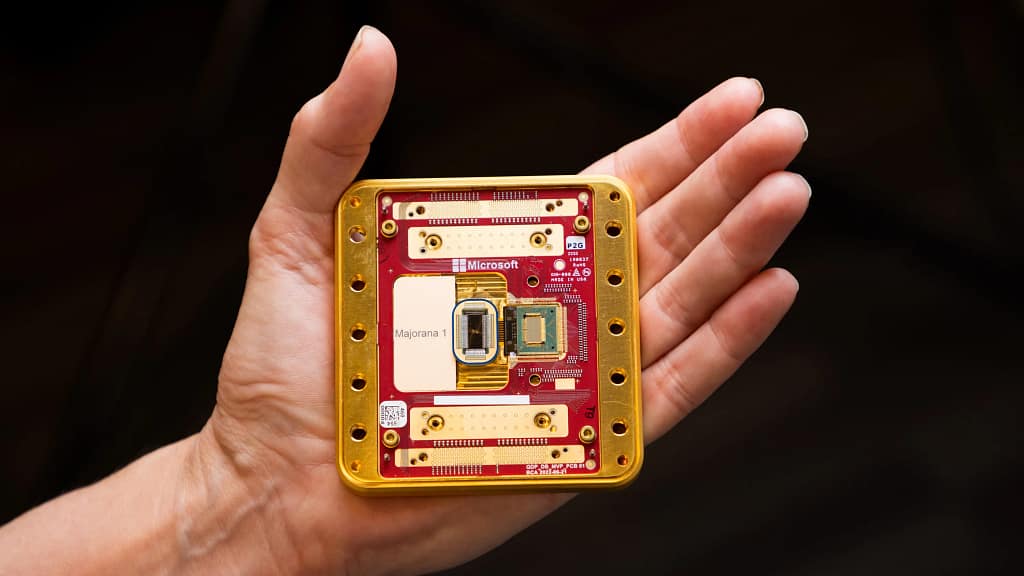
Microsoft’s Topological Qubits Breakthrough
In early 2025, Microsoft announced a significant milestone with topological qubits — a fundamentally different approach to building qubits that could be far more stable and error-resistant. If this approach scales, it could leapfrog the current leaders. The competition is fierce, and the breakthroughs are coming fast.
Quantum Cloud Services Are Real
Amazon Braket, IBM Quantum, Google Quantum AI, and Microsoft Azure Quantum all offer cloud access to quantum computers. You don’t need to build or own a quantum computer anymore — you can rent time on one. For researchers, developers, and even curious students, the barrier to entry has never been lower.
Real World Applications: Why Quantum Computing Will Change Your Life
Let’s get very specific about how this technology will affect real people — people like you and me.
Drug Discovery and Medicine
Right now, developing a new drug takes about 10-15 years and costs over $2 billion on average. A huge chunk of that time and money goes into simulating how molecules interact — something classical computers do very poorly with complex molecules.
Quantum computers can simulate molecular interactions at the quantum level with perfect accuracy. This means:
- Diseases like Alzheimer’s, cancer, and antibiotic-resistant infections could have treatments discovered in years instead of decades
- Personalised medicine tailored to your exact genetic makeup becomes computationally feasible
- The COVID-19 vaccine development speed was impressive — quantum could make it even faster
This isn’t speculation. Pharmaceutical companies, including Pfizer and Roche, are already running quantum computing experiments today.
Climate Change and Materials Science
Finding new materials for better solar panels, more efficient batteries, and carbon capture could be the key to solving climate change. These material discovery problems require simulating quantum mechanical interactions, which is, fittingly, exactly what quantum computers do best.
A quantum computer could potentially design a room-temperature superconductor — a material that conducts electricity with zero loss — which would revolutionise power transmission and save enormous amounts of energy worldwide.
Financial Modelling and Optimization
Banks and financial institutions deal with mind-bogglingly complex optimization problems every day — portfolio optimization, risk assessment, fraud detection, and derivatives pricing. Quantum algorithms like the quantum approximate optimization algorithm (QAOA) are already being tested by Goldman Sachs, JPMorgan, and other financial giants.
For you as an individual, this could eventually mean better financial products, more accurate risk pricing, and more efficient markets.
Artificial Intelligence
Here’s one that should really get your attention. Quantum machine learning is a field that combines quantum computing with AI. Quantum computers could train machine learning models exponentially faster and handle datasets that are simply too large for classical computing.
The AI boom we’re experiencing right now — ChatGPT, Gemini, Claude, and all the rest — runs on classical computers. Imagine what becomes possible when AI runs on quantum hardware. We genuinely don’t know the upper limits, and that’s both thrilling and a little humbling.
Cybersecurity: The Double-Edged Sword
This one deserves special attention because it affects everyone who uses the internet.
Here’s the scary reality: most of today’s internet encryption — the technology that protects your banking passwords, your WhatsApp messages, your Aadhaar data — relies on the fact that classical computers cannot factor very large numbers quickly.
Quantum computers, using an algorithm called Shor’s algorithm, could potentially break this encryption.
This is why governments and cybersecurity companies are racing to develop post-quantum cryptography — new encryption methods that even quantum computers can’t break. The US NIST has already standardised several post-quantum cryptographic algorithms. India’s cybersecurity agencies are watching closely.
The good news is that the quantum computers capable of breaking current encryption are still years away. The better news is that the solution — quantum-safe encryption — is already being developed and deployed.
The Big Challenges Nobody Talks About Enough
Quantum computing sounds incredible — because it is. But let’s be honest about where we actually are.
The Error Problem is Massive
Qubits are extraordinarily fragile. They’re sensitive to temperature, vibration, electromagnetic interference, and even cosmic rays. Any disturbance causes decoherence — the quantum state collapses prematurely, and you get errors.
Current quantum computers are described as NISQ devices (Noisy Intermediate-Scale Quantum) — they’re powerful enough to be interesting but noisy enough to be unreliable for most real-world applications. Error correction is one of the biggest ongoing research challenges.
They Need to Be Incredibly Cold
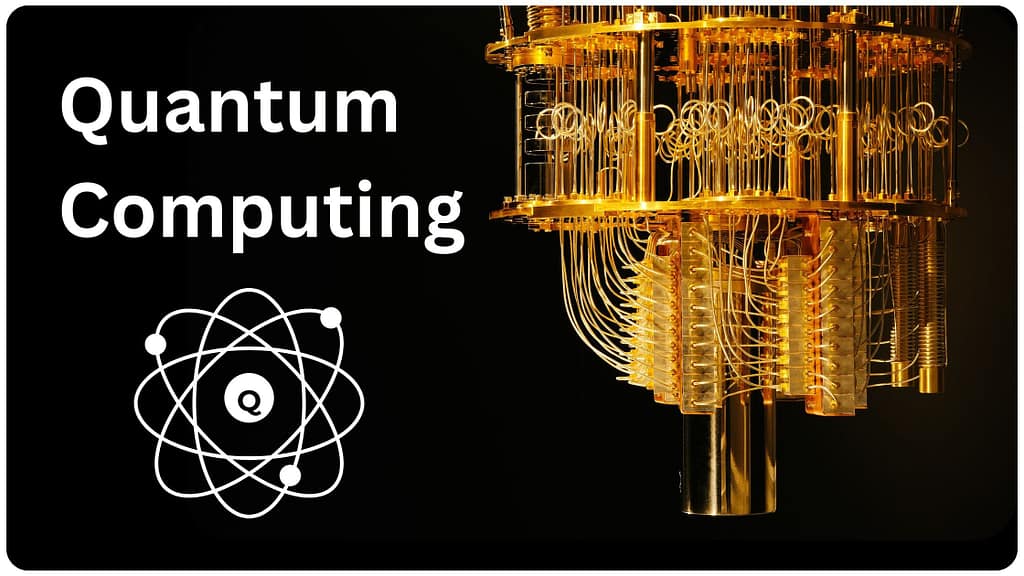
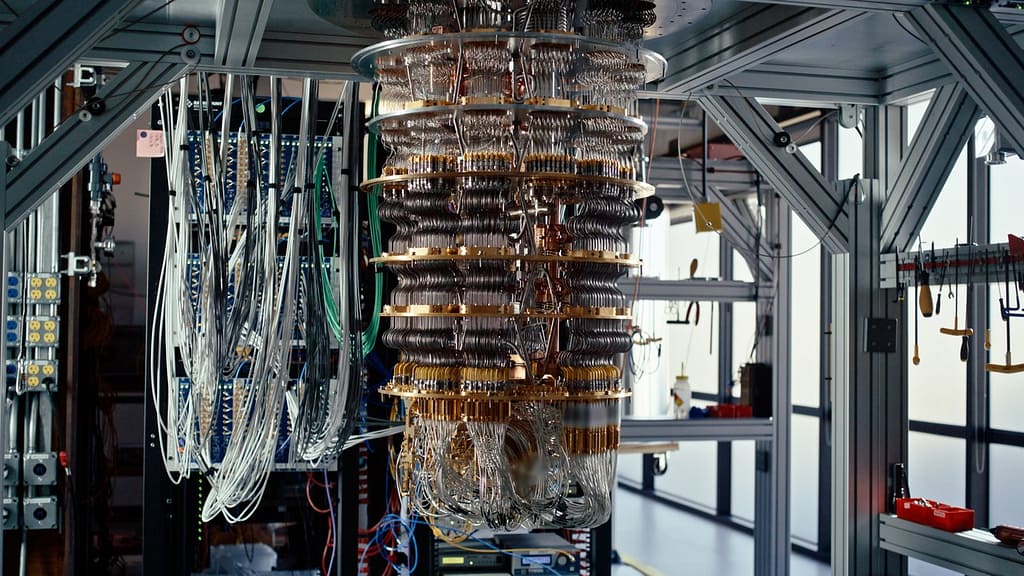
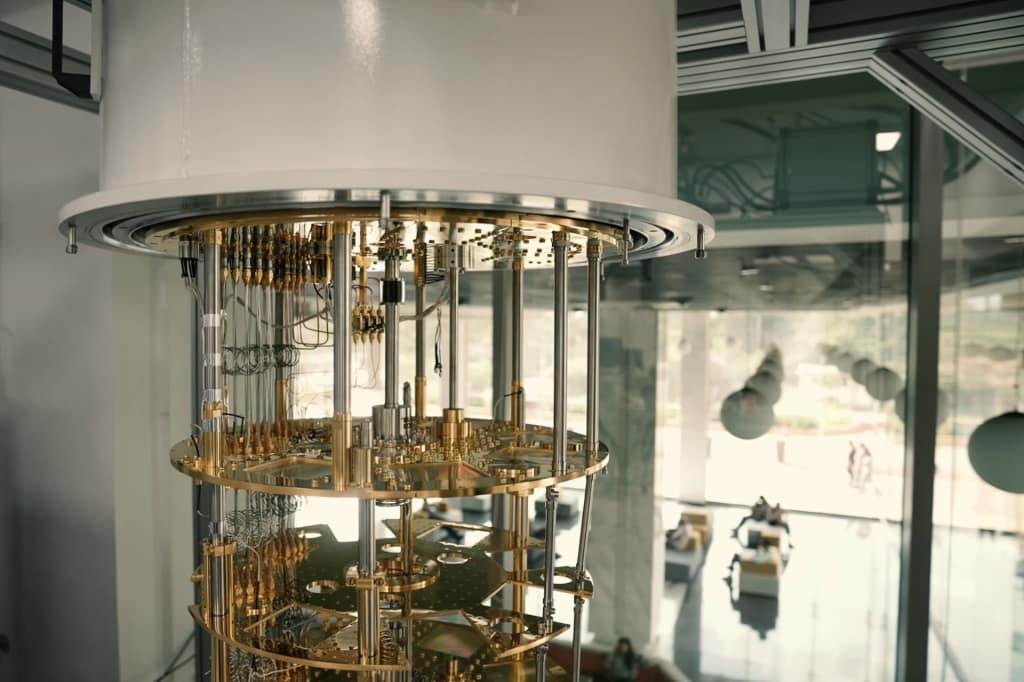
Most quantum computers operate near absolute zero — around -273°C, colder than outer space. This requires enormous, expensive refrigeration systems. It’s one of the reasons quantum computers currently look like elaborate chandelier installations rather than sleek devices.
Room temperature quantum computing is a holy grail that researchers are working toward, with some promising early results in photonic quantum systems.
The Software Gap
Even if we had perfect quantum hardware tomorrow, we’d have a software problem. Quantum programming requires entirely new ways of thinking about algorithms. We’re still in the early days of developing quantum software, quantum programming languages (like Qiskit from IBM and Cirq from Google), and quantum applications.
There’s a massive talent shortage in quantum computing. Which is, again, an opportunity if you’re reading this as a student or early-career professional.
Should You Learn Quantum Computing?
Here’s my honest advice
If you’re a student or early career professional: Yes, absolutely start learning the basics now. You don’t need a physics PhD to get started. The field needs software developers, engineers, and domain experts (chemistry, biology, finance) who understand quantum concepts, and business professionals who can translate quantum capabilities into real applications.
If you’re a working professional in tech, start building quantum literacy. You don’t need to become a quantum programmer, but understanding what quantum computing can and can’t do will make you more valuable as the technology matures.
If you’re a curious person who just wants to understand the world, read articles like this one, watch YouTube explainers, and follow the news. Quantum computing will affect your life within this decade, and informed citizens make better decisions.
Free Resources to Get Started
- IBM Quantum Learning — Free courses from the company actually building quantum computers
- Qiskit — IBM’s open-source quantum programming framework, free to use
- Microsoft Azure Quantum — Free learning resources and cloud access
- Coursera’s Quantum Computing specializations — Several universities offer these
- YouTube channels like Quantum Computing UK, Looking Glass Universe, and PBS Space Time do excellent, accessible explainers
Quantum Computing vs AI: Which Technology Will Change the World More?
This is the question I get asked the most, so let’s address it directly.
Right now, in 2026, AI is winning that race. AI has already transformed how we work, how we communicate, and how we create. The impact is immediate and visible.
Quantum computing’s transformative impact is still mostly in the future — probably 5-15 years away for broad real-world applications, depending on how quickly the error correction challenges get solved.
But here’s the key insight: these technologies will amplify each other.
Quantum computers running AI algorithms could solve problems neither technology can tackle alone. The combination of quantum computing and AI might be one of the most consequential technological developments in human history.
We’re building both technologies simultaneously. And that’s a remarkable moment to be alive.
The Human Side of Quantum Computing
I want to end this section with something that often gets lost in the technical excitement.
Quantum computing is being built by human beings — brilliant, flawed, passionate people working in labs in Bengaluru, Tokyo, London, and San Jose. People who choose to dedicate their careers to something most people don’t understand yet.
I think about Dr Shohini Ghose, a Canadian-Indian quantum physicist who has spent her career not just doing quantum research but also making it accessible to everyone. She gave a TED Talk about quantum computing that has been watched by millions. She embodies what this field needs — deep expertise combined with a genuine desire to share knowledge.
Or the young researchers at IIT Madras and IISc Bangalore working on India’s National Quantum Mission, who are choosing to build India’s quantum future rather than taking lucrative software jobs.
Technology is always, ultimately, a human story. And quantum computing is a human story about our relentless desire to understand and shape the universe at its deepest levels.
Frequently Asked Questions (FAQ)
What is quantum computing in simple terms?
Quantum computing is a type of computing that uses quantum mechanical phenomena — like superposition and entanglement — to process information in fundamentally different ways than regular computers. While regular computers use bits (0 or 1), quantum computers use qubits that can be 0, 1, or both simultaneously. This allows them to solve certain complex problems exponentially faster than any classical computer.
Is quantum computing available today?
Yes, but with limitations. Companies like IBM, Google, and Amazon offer cloud access to real quantum computers. However, current quantum computers are still noisy and error-prone (called NISQ devices), which limits their practical usefulness. Large-scale, fault-tolerant quantum computers that can tackle the most important real-world problems are still years away.
Will quantum computers replace regular computers?
No. Quantum computers are not a replacement for classical computers — they’re a complement. Your laptop, phone, and servers are better suited for most everyday tasks. Quantum computers excel at specific problem types: optimization, simulation, cryptography, and machine learning. The future is both technologies working together.
When will quantum computing become mainstream?
Most experts estimate that broadly useful, fault-tolerant quantum computers will arrive somewhere between 2030 and 2040. Some specific applications may arrive sooner. The field is advancing rapidly, but there are still significant engineering challenges to overcome, particularly around error correction.
Is quantum computing a threat to internet security?
Potentially yes, in the future. A sufficiently powerful quantum computer could break current encryption methods. However, the cryptography community has already developed quantum-resistant encryption algorithms, and these are being standardised and deployed. By the time quantum computers are powerful enough to be a threat, our encryption should already be upgraded.
Can I learn quantum computing without a physics background?
Absolutely. While a physics or mathematics background helps, there are excellent resources for learning quantum computing from a software perspective. IBM’s Qiskit community, Microsoft’s Azure Quantum learning platform, and various university courses teach quantum computing from a programming angle. You need more linear algebra than physics to get started.
What jobs exist in quantum computing in India?
India’s National Quantum Mission is creating opportunities in quantum hardware engineering, quantum software development, quantum algorithm research, and quantum applications in finance, pharma, and cybersecurity. Major global tech companies have research teams in India, and Indian startups in the quantum space are emerging. It’s an early-mover opportunity with significant upside.
How is quantum computing different from AI?
AI is software — algorithms that learn patterns from data, running on classical hardware. Quantum computing is a new type of hardware that can run both classical and quantum algorithms. They’re complementary technologies. Quantum computers could dramatically accelerate AI training and enable AI applications that aren’t currently possible.
The Bottom Line: Why You Should Care About Quantum Computing Right Now
We are living through one of the most extraordinary periods in the history of human technology.
In the last decade, smartphones became supercomputers in our pockets. AI went from academic curiosity to transforming every industry. And now, quietly but unstoppably, quantum computing is moving from theoretical physics to engineering reality.
You don’t need to become a quantum physicist. You don’t need to understand the math. But you should understand that this technology is coming, it will affect your life, and the people who understand it early will have significant advantages — in their careers, in their investments, in their ability to navigate the world that’s being built right now.
The universe, it turns out, runs on quantum mechanics. We’re finally learning to speak its language.
And that changes everything.
What’s Next for You?
If this article opened your eyes to quantum computing, here’s what I suggest:
Start with one resource. IBM’s free Quantum Learning platform is a great entry point. Or just subscribe to CosmicQubits — we break down exactly these kinds of mind-bending technologies in plain, human language every single week.
The quantum future is being built right now. You might as well understand it.
Did this article help you understand quantum computing better? Share it with a friend who’s been confused by all the quantum hype. And drop your questions in the comments — I read every single one.